
Continued from our Retreat & Renew Daily Tip.
Excerpted from EmbodiWorks.org.
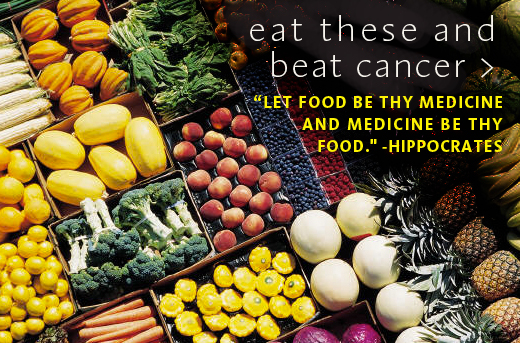
“Let food by thy medicine and medicine be thy food.” Hippocrates
Food is medicine against cancer when you know what to eat and what not to eat. An optimal diet with cancer fighting foods promotes cancer cell death along with optimal health throughout your body, mind, and spirit. Explore our cancer information about a quality cancer diet to support quality of life and cancer survival. Nutrition and cancer is one of the most important areas of focus in an integrative cancer care plan.
“Diet affects cancer both directly and indirectly. Nutrients directly impact the mechanisms by which cancer cells grow and spread. They indirectly help control the cancer by changing the surrounding biochemical conditions that either encourage or discourage the progression of malignant disease.” Keith Block MD, Life Over Cancer.
Nutrition and cancer recommendations about top cancer fighting foods to eat were compiled based on research studies and cancer resources at the end of this section with emphasis on Anticancer by David Servan-Schreiber, MD, PhD. Please keep in mind that our cancer information provides general anticancer dietary recommendations. Since each person is unique, variability exists between optimal cancer fighting foods for you compared to other people. Since most people eat multiple times daily, cancer diet choices have a strong and constant impact on the body. The foods that you eat support your wellness, vitality, quality of life, and length of life. For cancer patients receiving therapies such as radiation and chemotherapy, proper nutrition can increase the efficacy and diminish the toxicity of conventional cancer treatments. Proper nutrition with cancer fighting foods is also a primary area of focus for cancer prevention. The largest epidemiological study conducted on the global relationship of environmental factors and cancer prevention indicates that 50 percent of cancers have a nutritional component1.
Educate yourself with cancer information about top cancer fighting foods in a cancer diet supporting cancer cell death and your optimal wellness. Learn what nutrition and cancer through foods that create harmony versus havoc to your body, mind, and spirit. Consult with an integrative cancer care expert in nutrition and cancer, read quality cancer information books about food choices, and listen to your body to create your optimal cancer diet.
Cruciferous Vegetables
Brussels sprouts, collard greens, kale, chard, watercress, turnip, cabbage, broccoli, cauliflower, bok choy, kohlrabi, and others.
- Contain very powerful anticancer compounds through glucosinolates, including sulforaphane and indole-3-carbinols
- Promote cancer cell death
- Block the growth of new blood vessels needed for cancer growth
- Detoxify certain cancer causing substances
- Prevent precancerous cells from developing into malignant tumors
Carotenoids
Fruits and vegetables bright-colored yellow, orange, and red.
- Stimulate the growth of immune cells and increases their capacity to attack tumor cells through lutein, lycopene, phytoene, and canthaxanthin.
Leafy Greens
- Act as an antioxidant
- Support immune functions
Sprouts
Broccoli sprouts, alfalfa sprouts, kale sprouts, sunflower seed greens, wheatgrass juice, barley grass juice, oat grass juice, cabbage sprouts, cauliflower sprouts, and others.
- Contain high levels of chlorophyll supporting many healthy functions in the body
- Act as an antioxidant
- Provide cells with high levels of enzymes supporting detoxification and other benefits
Berries
Strawberries, raspberries, blueberries, cherries, cranberries, pomegranates, grapes, and others.
- Contain ellagic acid that supports anticancer activity
- Stimulate mechanisms of elimination of cancer causing substances in the body
- Inhibit the growth of blood vessels that support cancer
- Enhance the efficacy of chemotherapy
Garlic, Onions, Leeks, Shallots, and Chives
- Help remove toxic substances such as nitrosamines and N-nitroso compounds that are created in overgrilled meat and during tobacco consumption
- Promote the death of cancer cells
- Regulate blood sugar levels that reduces insulin secretion and IGF and thereby the growth of cancer cells
- Enhance immune function
- Reduce blood clotting and lowers blood pressure
Herbs and Spices
Turmeric and Curry
- Act as the most powerful anti-inflammatory
- Help stimulate the death of cancer cells
- Inhibit the growth of new blood vessels needed for cancer growth
- Enhance the effectiveness of chemotherapy and reduces tumor growth in the laboratory
Ginger
- Acts as a powerful anti-inflammatory and antioxidant
- Acts against certain cancer cells
- Helps reduce the creation of new blood vessels needed for cancer growth
- Alleviates nausea from chemotherapy or radiotherapy
Rosemary, Thyme, Oregano, Basil, and Mint
- Promote the death of cancer cells and reduces their spread by blocking the enzymes they need to invade neighboring tissues
- Act as an anti-inflammatory and antioxidant
Green Tea
- Reduces the growth of new blood vessels needed for cancer growth and metastases through high levels of polyphenols, including catechins
- Acts as a powerful antioxidant and detoxifier activating enzymes in the liver that eliminate toxins from the body
- Facilitates the death of cancer cells
- Enhances the effects of radiotherapy on cancer cells in the laboratory
Seaweed
Nori, kombu, wakame, arame, and dulse.
- Inhibit tumor growth
- Help reduce the formation of new blood cells needed for cancer growth
- Stimulate immune cells such as T-cells and natural killer cells
- Act as an anti-inflammatory
Mushrooms
Maitake, agaricus, shiitake, reishi, turkey tails, enokidake, cremini, Portobello, oyster, and caterpillar fungus or cordyceps.
- Stimulates the reproduction and activity of immune cells such as natural killer cells
- Enhance the efficacy of chemotherapy while reducing side effects such as nausea, vomiting, and loss of appetite
- Help to suppress cancer metastasis
Whole Grains
Brown rice, buckwheat, whole-grain bread, wild rice, rye, quinoa, whole-wheat pasta, barley, and othersNote: People with gluten allergies need to avoid glutens.
- Dilute, binds, inactivate, and remove carcinogens, cholesterol, bile acids, and various toxic substances
- Prevent the fueling of some types of cancers by balancing levels of glucose and insulin
Fish
Caution: Many fish contain high levels of toxins such as mercury. Generally, the bigger the fish, the more toxins, and the smaller the fish, the less toxins.
Deepwater, northern ocean fish are best, including salmon, cod, haddock, mackerel, and sardines.
- Supplies omega-3 fatty acids
- Acts as an anti-inflammatory
- Strengthens healthy cellular structure, function, and communication
- Stimulates immune cells and function
- Supports cancer prevention and may promote anti-cancer activity
- Promotes brain and nervous system health
“Omega-3s can reverse tumor metastasis as well as a tumor’s resistance to radiation or chemotherapy, and may also enhance the effectiveness and minimize the toxic side effects of some chemotherapy drugs.” Keith Block, MD, Life Over Cancer.
Oils, Nuts, and Seeds
Note: Healthy oils include olive, hemp, walnut, coconut, and flaxseed oils that are not rancid. Coconut oil is the most stable for cooking at high temperatures, but must be consumed in moderation. Avoid corn, soy, vegetable, peanut, sunflower, and safflower oils.
- Supply omega-3 fats and especially through flaxseeds and walnuts
- Act as an anti-inflammatory
- Support healthy cellular, structure, function, and communication
- Stimulate immune cells and function
- Promote brain and nervous system health
What are some other recommendations about foods to support detoxification?
“Nutrition must be optimized for efficient detoxification. The diet must be based upon whole foods (plenty of vegetables, fruits, and fiber) and should emphasize foods with a net alkalinizing impact with lower amounts of acid-forming foods. Generous portions of cruciferous vegetables should be eaten daily, along with modest amounts of olive oil, as well as onions, garlic, and modest amounts of lean, unprocessed proteins. Supplements can include alkalinizing minerals (Calcium, Magnesium, Potassium, and Zinc), along with multivitamin/trace elements, essential fatty acids (DHA/EPA), N-acetylcysteine, lipoic acid, and antioxidant support (vitamins C and E, grape seed extract, green tea extract).”2
For More Information
- Anticancer: A New Way of Life by David Servan-Schreiber, MD, PhD
- The China Study: The Most Comprehensive Study of Nutrition Ever Conducted and the Startling Implications for Diet, Weight Loss, and Long-Term Health by T. Colin Campbell, PhD & Thomas M. Campbell II
- Crazy Sexy Diet by Kris Carr
- Foods That Fight Cancer: Preventing Cancer Through Diet by Richard Beliveau, PhD & Denis Gingras, PhD
- Integrative Oncology by Donald Abrams, MD and Andy Weil, MD
- Life Over Cancer: The Block Center for Integrative Cancer Treatment by Keith Block, MD.
Recipe Books
- The Cancer-Fighting Kitchen: Nourishing, Big-Flavor Recipes for Cancer Treatment and Recovery by Rebecca Katz and Mat Edelson
- One Bit at a Time by Rebecca Katz and Mat Edelson
Some Articles Related To Eat and Beat Cancer :


- 17th Annual Earth Day Beauty Awards - April 22, 2026
- Nature’s Nectress - April 21, 2026
- Simpler Hair Color - April 20, 2026