
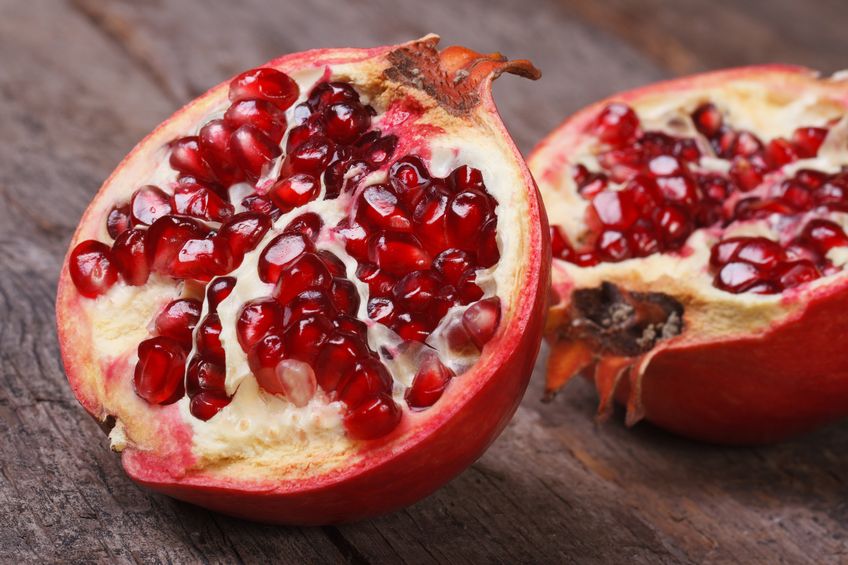
Bursting with seeds, the pomegranate has long been revered as a symbol of health, fertility, and prosperity.
Shrouded in myth and mystery throughout history, this renowned fruit has also been linked to many cultures and religions.
Legend has it that the first pomegranate tree grew in the Garden of Eden and some biblical scholars believe that it was a pomegranate, not an apple, that prompted the original sin. In Greek mythology, Persephone was so tempted by its jewel-like appearance that she took the forbidden fruit, thereby condemning herself to spending a portion of every year in the underworld.
Ancient Egyptians were buried with pomegranates, insuring safe passage and rebirth. Babylonians believed that chewing pomegranate seeds before battle made soldiers invincible and the ancient Chinese believed that pomegranates could offer longevity and even immortality.
While immortality is a bit of a stretch, this historically rich and delicious fruit is powerful, powerfully healthy that is. Pomegranates are free radical fighting machines. And that’s good news for you and your body.
‘Radical’ Free Radicals
Free radicals might sound like a hip rock band, but don’t let the catchy name fool you. They have been implicated in ‘radically’ accelerating the body’s natural aging processes, and they play a major role in the development of cancer, heart disease, stroke, arthritis, and possibly a host of other ailments.
Scientifically speaking, free radicals are unstable, highly reactive, molecules in the body that cause damage when they ‘attack’ healthy cells. Damage to cells by unchecked free radicals can manifest as serious illnesses like cancer and atherosclerosis, the leading cause of heart disease. For all you non-scientist types, think of free radicals as ravenous vultures ready to make a frenzied assault on your cells. Yikes!
Although our bodies constantly produce free radicals as a byproduct of normal metabolism, they also thrive in modern society in the form of pollutants, pesticides, herbicides, and cigarette smoke. Stress factors such as trauma, disease, infection, as well as stress itself also accelerate the body’s production of free radicals.
Natures Best Neutralizer
Antioxidants are naturally occurring substances in plants that protect the body from free radicals by neutralizing them before cells are damaged. And pomegranates are chock-full of these important disease-fighting compounds.
The US Department of Agriculture rated a large number of foods according to their Oxygen Radical Absorbance Capacity (ORAC). A food’s ORAC is essentially its antioxidant fighting power. The higher the ORAC score, the more power the food has to neutralize cell-damaging free radicals. Pomegranates topped the charts as one of nature’s richest sources of antioxidants. And the news for pomegranates, and its juice (like POM Wonderful), just keeps getting better.
A study published in the American Journal of Clinical Nutrition reported the cholesterol oxidation process, which leads to the narrowing of arteries that result in heart disease, was slowed by as much as 40 percent when healthy subjects drank 2-3 ounces of pomegranate juice a day. Blood pressure was also reduced by five percent in people with hypertension. While pomegranate research is in its infancy and more long-term studies are needed, the news so far is certainly encouraging.
According to Ayurvedic specialist Dr. Partap Chauhana, founder of the Jiva Ayurveda Clinic and Panchakarma Center, the Jiva Pharmacy, and
Ayurvedic.org, pomegranate has a mixture of three tastes – sweet, sour, and astringent. It is light (easy to digest) and it balances all the three doshas (vata, pitta, kapha). It also stimulates the digestive fire and binds the stools.
Pomegranate juice is also a rich source of the potent antioxidants known as polyphenols (see Protective Pomegranates sidebar). It has more of these powerful disease fighters than green tea, red grape juice, or orange juice. In addition, a whole pomegranate has only around 100 calories and provides a day’s worth of vitamin C as well as other good-for-you vitamins, minerals, and phytochemicals. Says Pomegranate Health’s scientific advisor, Ephraim Lansky, M.D., “The pomegranate is unique for its extraordinary array of safe and effective plant estrogens. No other natural product has such potential for a safe and effective hedge against the ravages of menopause and aging.”
More Than a Pretty Face
While it is clear that pomegranates are well worth adding to your diet, many people avoid them because they don’t know what to do with this attractive fruit. With a little know-how, pretty pomegranates can become a lot more than a decorative holiday centerpiece.
To find a good pomegranate, select one that is heavy for its size with skin that appears shiny and free of blemishes and cracks. The larger the fruit, the sweeter it will be, as it will have more juice.
Pomegranates, like apples, have a long storage life of approximately two weeks. It is best to store them out of direct sunlight in a cool, dark place. Storing them in the refrigerator can extend their shelf life up to two months or more. They are fully ripe and ready to eat when they develop a distinctive red color and make a metallic sound when tapped.
Inside is a mass of edible seeds, encased in a translucent sac of crimson pulp that is held together by segments of bitter inedible yellow membrane. The juice of this versatile fruit can be made into vibrant syrup when reduced, used in marinades, or as a glaze for poultry and fish. And the seeds provide a tart, crisp addition to salads, desserts, waffles, smoothies, yogurt, and more. Or they can be enjoyed simply by the handful, like small berries.
It’s time for you to dig into a powerful pomegranate.
The Art of Eating a Pomegranate
The easiest way to eat a pomegranate is to score the pomegranate so it will open easily, then place the pomegranate in a bowl of water. Break the pomegranate open underwater so that the arils will sink to the bottom of the bowl and the white membrane will float to the top. Enjoy!
Protective Pomegranates
Studies have shown the natural antioxidant, anti-inflammatory, and antibacterial properties of the polyphenols and ellagic acid found in pomegranates offer healing and protective benefits for skin health. To take advantage of all these skin benefits, try skincare products made with pomegranates like Vitalic Energizing Pomegranate Moisturizer from Murad, Body Systems’ Pomegranate Sugar Scrub, and Pomegranate Seed Oil from Pomegranate Health.
By Heather Jones, R.D.

- Your Go-to Autumn Skin Reset From a Clean Beauty Expert. - August 25, 2025
- What If Your Fertility Journey Wasn’t Just About Trying – But About Becoming? - July 29, 2025
- KM Herbals - April 21, 2025