
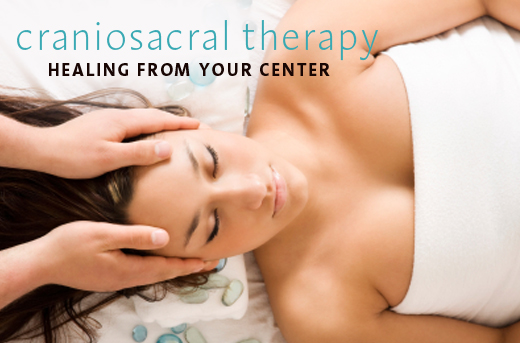
Creating health through the subtle energy shifts in craniosacral work
When we think of the natural rhythms of the human body, the heartbeat and the breath quickly come to mind. But these are not the only regular ‘pulses’ we share. There is a third and more subtle rhythm, that of the craniosacral system. It includes the bones of the cranium, the bones of the sacrum, the cerebrospinal fluid or CSF (which bathes the Central Nervous System) and the membranes that surround it. The gentle flow of CSF creates a regular pulse that can be felt along the sutures of the skull and, by certified practitioners, throughout the connective tissues of the body.
According to Dave Tomlinson, LMT, CST-D, an instructor for the Upledger Institute in Palm Beach Gardens, Florida, the craniosacral system, “is the environment that your nervous system grows up in. Any tightness in it can cause compression in the spinal cord leading to pain in the limbs or even organ dysfunction.” Melanie Diamond, CST, and founder of Hands on Heads, a non-profit serving children with autism and ADHD in Berkeley, California, says, “The craniosacral mechanism is the life pulse of the system. It keeps everything else functioning.”
Though the craniosacral system has only been scientifically defined in the last four decades (thanks largely to the work of John Upledger, DO), its ancient roots trace back to the Aesclepion healers in Egypt, and similar work has also been performed in China for centuries. Its western origins derive from the early twentieth century work of an osteopath, William Sutherland, who began exploring the nature of the bones of the skull. Despite the prevailing wisdom that these bones fuse with age, Sutherland believed they were designed to allow small movements. His work, which became known as cranial osteopathy, was the first of its kind in allopathic medicine and the first to recognize the potential role of the craniosacral anatomy in holistic health care.
Upledger knew very little about Sutherland when he first experienced the rhythmic movement of the craniosacral system while assisting in a spinal surgery in 1970. After taking a course in cranial osteopathy a few years later, Upledger became interested in not just the manipulation of the cranial bones, but in understanding and manipulating the craniosacral rhythm through the membranes themselves. Thus, modern Craniosacral Therapy (CST) was born.
A hands-on therapy, CST begins with a full body assessment to locate the body’s areas of tension. Unlike many forms of bodywork, CST is performed fully clothed. Though the craniosacral system itself can be directly manipulated through the head, spine, and sacrum, the treatment isn’t always concentrated in these areas. Rather, the session is based on the individual and their unique pattern of tension and restriction. Tomlinson notes, “Cranial work goes in with the idea of helping the body release on its own. Therapists are taught to approach every client without an agenda.”
Typically using very light pressure, “the therapist ‘listens’ to the craniosacral rhythm, assessing symmetry, rate, quality, and amplitude. The work is characterized by long holds, gentle stretches, a special technique called tissue unwinding, and various means of cradling the head and sacrum. By normalizing and regulating the flow of CSF, Diamond says, “This work goes right to the source of the problem.” She adds, “Because you are working from the inside out the results are long lasting and very profound.” According to Tomlinson, the super light touch is one key to CST’s effectiveness. He notes, “When Dr. John [Upledger] was doing his research at Michigan State University, he tested the use of different levels of pressure on body tissue response. He found that the lighter the touch, the better the tissue response. It’s almost like you are getting in under the body’s radar.”
By helping to release restrictions in the craniosacral system and throughout the body’s fascia (a thin connective tissue that surrounds every organ, muscle, and tissue), practitioners claim CST helps the body heal itself. Indeed, it has provided relief to clients with low back pain, TMJ, birth trauma, colic, autism, brain, and spinal cord injuries, and central nervous system diseases. According to Tomlinson, it is also valuable in treating Post Traumatic Stress Disorder, and notes that he has treated Vietnam veterans and GI’s returning from the wars in Iraq and Afghanistan. Interestingly, it can also be successfully used on animals, like horses and rescued dogs.
A typical session usually lasts about one hour and is deeply relaxing. Though the aftereffects will vary from person to person, Diamond says, “People generally sleep more deeply, are able to focus more clearly, and may even experience a temporary improvement in eyesight and appetite.” Tomlinson adds, “It puts you in a parasympathetic place.” Since the parasympathetic nervous system’s job is to run and regulate many of the body’s most vital systems – digestion, metabolism, glands, and hormones – the profound relaxation associated with CST makes it an excellent tool for stress management and preventative health care. And, adds Diamond, because it is so gentle and non-invasive it is a great choice for victims of trauma or clients who are hypersensitive to touch.
Finally, though modern, western craniosacral therapy has only been around about four decades, different approaches and ‘branches’ do exist within the work. The Upledger Clinic and Institute are perhaps the best known; they emphasize the importance of releasing tension in the craniosacral membranes. Sutherland’s approach is to focus more on the movement of the cranial bones and sutures, while other approaches rely on the stimulation of nerve endings in the scalp and along the sutures to create a reflexive relaxation response throughout the body. Other schools place greater importance on the fluid itself. The emphasis on the importance of the craniosacral system is the same, however, and so is the general goal “to bring balance and homeostasis to the craniosacral fluid thereby promoting optimal overall health.
Try this at home:
Stillpoint Induction
Compliments of Dave Tomlinson, CST-D, The Upledger InstituteFor a do-it-yourself introduction to craniosacral work, Tomlinson suggests using a stillpoint inducer. This is a product usually made from rubber or foam that can be purchased through the Upledger Institute or through online stores such as Gaiam (www.gaiam.com). Alternatively, he notes, you can make something similar with two tennis balls and a sock. Put both balls into the sock and tie it off. Lie down on your back and place the homemade stillpoint inducer beneath your head, where your head would hit the floor or bed. Make sure the contact is on the bone, not the muscle. The exercise can be done for 10-15 minutes every day to promote relaxation and stress reduction. Tomlinson says, “The only real contraindication is not to use it with any pathological condition where changing fluid pressure in the head would be a bad thing. For the average person who is walking, talking, and going about all their activities of daily living this shouldn’t be an issue.”
Get it Here:
The Body Sanctuary
Westlake Village, CA
(805) 230-0010
www.body-sanctuary.com
Canyon Ranch Lenox
Lenox, MA
(800) 742-9000
www.canyonranch.com
Cliff Spa at Snowbird Resort
Salt Lake, UT
(800) 232-9542
www.snowbird.com
Hyatt Regency Tamaya Resort & Spa
Albuquerque, NM
(505) 867-1234
www.tamaya.hyatt.com
The Lodge at Woodloch
Hawley, PA
(866) 953-8500
www.thelodgeatwoodloch.com
Sedona Rouge Hotel & Spa
Sedona, AZ
(866) 247-7882
www.sedonarouge.com
Skin Deep – The Body Spa
Huntington Beach, CA
(714) 841-3313
www.eskindeep.com
Stoweflake Mountain Resort & Spa
Stowe, VT
(800) 253-2232
www.stoweflake.com
by Tanya Triber


- Growing Vegetables From Scraps—16 Easiest Veggies. - August 12, 2026
- The Healing Power of Art — A Spa Day for Your Soul - July 25, 2026
- Guided Geothermal Wellness Retreats: The Next Phase of Wellness Travel - May 19, 2026