
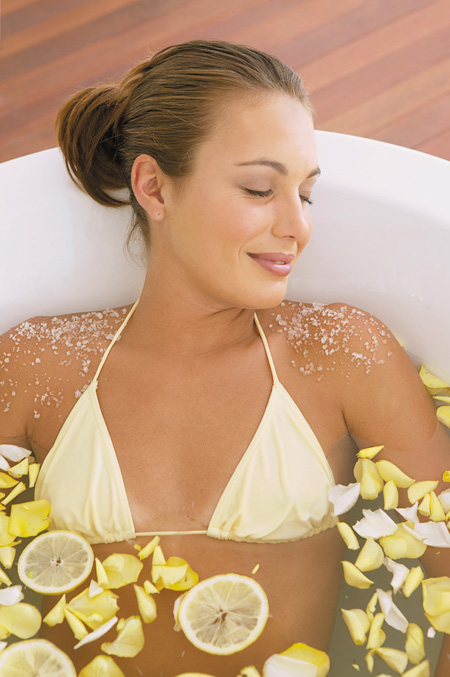
In the 90’s, spa guests were content to have a massage, try a fitness class, eat some healthy food, and return home. These days, the spa-goer wants what she learns (he too, as more and more men are going to spas) packaged into a “doggie bag.” She also wants it green. To show how far we’ve come, now there’s even a non-profit Green Spa Network, which helps properties become more environmentally aware. “Expect even more green,” says Amy McDonald, principal of Amy McDonald & Associates, a sustainable spa design and consultancy firm. “Because one of the most sustainable hospitality companies in the world, Six Senses Spas, is coming to North America from Asia; and closer to home, Starwood Capital Group has launched their ‘1’ brand, which includes sustainable design and infuses nature and wellness into an urban environment.”

Continuing last year’s trend, the predominant trend for 2009 is green. A recent ISPA (International Spa Association) survey shows that 76 percent of U.S. spas apply such environmentally sustainable practices as building green facilities and organic gardens, and utilizing locally grown products. The second biggest trend, according to the same survey, shows that at least 51 percent of U.S. spas offer educational programs and nutritional consultations. Forty percent of all spas offer healthy eating classes, and the spa kitchen is getting hotter with many U.S. spas adding cooking experiences from weeklong schools with celebrity chefs to private lessons with tips on taking home the healthy cooking experience. Another trend is new or customized relaxation, and nearly a quarter of all U.S. spas now allow clients to book blocks of time for personalized treatments instead of specific services.
Keep it Green
To keep it sustainable, Buttermilk Falls Inn and Spa in Milton, New York, uses solar-power and geothermal energy to heat the sauna, steam room, and mineral saltwater pool; and the windows and doors of the pool’s relaxation area are made of special insulated glass. All natural waste is composted, and there are recycling bins in all common areas and guest rooms. The organic peaches, apples, and pears from Buttermilk Falls orchards are used for breakfast and made into jams, pies, and syrups; and herbs and flowers grown in the garden are used in pedicure footbaths.
The Spa at Pelican Hill at the newly opened Resort at Pelican Hill, Newport Beach, California, takes it a step further with an on-staff naturalist and ecotourism professional who lead trips to a wildlife sanctuary. Pelican Hill’s personalized programs include instruction in pressing plants and flowers, tips on growing and composting, and expeditions to study tide pools.
The Arizona Biltmore Resort & Spa in Phoenix, Arizona, uses natural and organic skincare products in all treatments and organic, vegan ingredients for manicures and pedicures. “It’s part of our all-encompassing Green Initiative to significantly reduce our global footprint,” says Carol Ford, the Biltmore’s spa director. ESPA at Acqualina Resort & Spa in Sunny Isles, Florida, reduces the use of water, including offering waterless pedicures, which also reduce the chance of infection. Solage Calistoga in Napa, California, has sustainably-managed interiors and a bathhouse, which keeps cool by taking advantage of the neighboring trees for shade.
El Monte Sagrado in Taos, New Mexico, an early adaptor of leaving a lighter footprint, uses solar lighting, recycled and purified water flowing into ponds and waterfalls, and a holistic glass-enclosed botanical garden. Guests are invited to tour the grounds to learn how all grey and black water is made usable again, and how the rainwater collection system and geothermal system for heating and cooling work. They are shown the recycled building materials, low voltage ground lighting, and natural gas lamps. Treatment products eliminate mineral oils, paraffin waxes, and synthetic ingredients and replace them with essential oils and soy products. Water walls in the treatment rooms provide a natural cooling system along with a relaxing sound. By treating and recycling water with natural filters and purifiers (and without harsh chemicals), El Monte Sagrado is able to sustain a lush fertile environment that promotes life. This in turn creates a garden-like paradise. “Most importantly,” says Spa Director Mark Amoriello, “we take the time to educate our guests to reconnect with the earth and work together with nature.”
Down on the Farm
More spas than ever are planting organic gardens, and a number now offer cooking experiences. At the new Stowe Mountain Lodge in Vermont, Chef Sean Buchanan, an advocate of the local farm movement, escorts guests to his favorite farms, buys the produce, and then returns to the Lodge to teach a two-hour cooking lesson followed by a four-course dinner. The Golden Door Spa at The Boulders Resort in Scottsdale, Arizona, uses the products in its organic garden for services such as cucumber and mint in the Seasonal Sugar Scrub. “We encourage our guests to visit the garden to take the time to enjoy, meditate, and relax; and to see, touch, and smell the strawberries, tomatoes, herbs, citrus trees, grapes, and jalapenos,” says Spa Director Jennifer Wayland-Smith. Rancho La Puerta in Tecate, Mexico, has promoted fresh foods for sixty-eight years. “It’s about time healthy eating is more than just a trend,” says Deborah Szekely, founder of Rancho La Puerta. “It’s becoming a standard way of life.” The Spa at Camelback Inn in Scottsdale, Arizona, a JW Marriott property, which recently completed a $50 million renewal, now has organic herb gardens with cozy fire pits and a new menu focusing on fresh, local, and organic ingredients.
Education
“Guests are doing their own research and know a great deal about services through increasingly available information, [from such sources]as the Internet. As they become more seasoned spa-goers, they expect increased value and education from their spa experience,” says Spa Director Lia Rowland of Four Seasons Resort Scottsdale at Troon North. Four Seasons offers “Massage 101,” a session for couples in which guests learn professional massage techniques and are given a take-home tip sheet. Virginia’s Spa of Colonial Williamsburg makes educational literature available to guests and offers such courses as “Mindful Walking” in which guests learn to use Nordic walking poles while walking through Colonial Williamsburg. The program is based on the concept that the rhythmic pattern of walking enables the clearing of the mind and the focusing of intentions.
Spa-goers want not just education, but innovative practices. To meet this demand, Sheraton Wild Horse Pass Resort & Spa in Phoenix, Arizona, has developed a new Native American Spa Services menu. Located on and owned by the Gila River Indian Community, Sheraton Wild Horse Pass offers a unique connection to the Pima and Maricopa cultures. “Healing by Native American, Belen” is a program, which utilizes techniques passed down by medicine healers for centuries, including chanting and smudging. Sheraton Wild Horse Pass will soon offer “dream yoga” and Pima basket dancing. The Ojai Valley Inn & Spa in Ojai, California, has an educational creative program, The Artist’s Cottage in which resident artists help guests create mandalas (spiritual art), silverpoint drawing, silk scarf painting, and mixed media collages. Next-door at the resort’s Apothecary, guests blend natural, therapeutic essential oils to create their own fragrances.
De-stress and Detox
“Everyone is stressed,” says Lola Roeh, general manager of Aspira Spa at the Osthoff Lake Resort in Elkhart Lake, Wisconsin. “They come here to get away from the economic situation. They want more yoga, tai chi, meditation, and more relaxation massages.” To help achieve this goal, Aspira has introduced a Meditation Massage and Reiki into the spa menu. At Red Mountain Spa in Ivins, Utah, Spa Director Myrna Beardshear says, “Stress aggravates so many conditions, including allergies, arthritis, asthma, cancer, low back pain, and ulcers.” To satisfy clients searching for a way to find physical and emotional stress relief, Red Mountain offers a seven-night Detoxification and Renewal program. And the Spa at Las Ventanas al Paraiso, in Los Cabos, Mexico, incorporates stress reduction techniques from the ancient healers of Baja California, who used the four elements of Earth, Water, Air, and Fire as the foundation of their holistic ceremonial rites and healing rituals. One of their water treatments, Raindrop Therapy, combines ten essential oils along the spine to increase blood circulation and detoxify muscles to bring the body back to balance.
Men
“Men are the new women,” says David Erlich, director of spa operations at the Fairmont Sonoma Mission Inn in California. “We are witnessing the renaissance of the metro-man. The growth of male spa clientele is exponential, as men flock in numbers to experience treatments, epsecially therapeutic massage.” At The Lodge at Woodloch in the Lake Region of Northeast Pennsylvania, many men are booking spa treatments. “They hang out together in hydromassage; they read books, sit in a kayak and don’t want to move. They want longer treatments, peace and quiet, and they want to enjoy the food,” says owner Ginny Lopis. The same is true at the Ritz-Carlton Spa, Dallas, where men are indulging and pampering themselves more then ever. “Two years ago, men started getting more facials and in the last year more and more men are having manicures and pedicures,” says Julie Motley, Ritz-Carlton’s spa director, who attributes this to the fact that men are becoming more spa savvy.
{cms_selflink page=’jan2009-insight-spa-trends-20092′ text=’> next page’}
Some Articles Related To Spa Trends 2009 :

- Growing Vegetables From Scraps—16 Easiest Veggies. - August 12, 2026
- The Healing Power of Art — A Spa Day for Your Soul - July 25, 2026
- Guided Geothermal Wellness Retreats: The Next Phase of Wellness Travel - May 19, 2026